
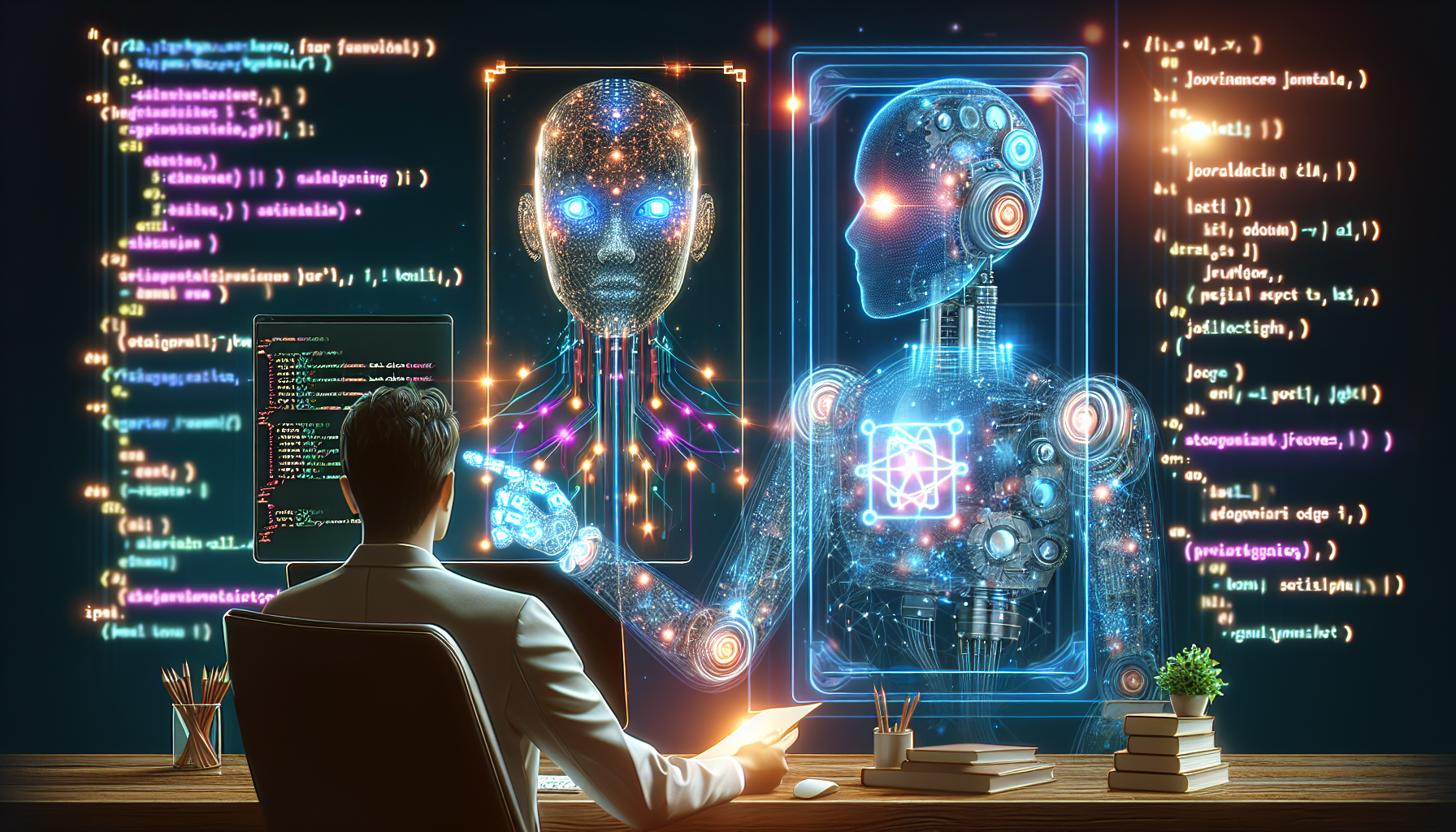
There’s a quiet shift happening in software development, and it’s not getting nearly enough attention. AI coding assistants are starting to replace the kind of work that junior developers traditionally handled.
Not entirely. Not yet. But enough to matter.
Tools like code-generating AI can now write functions, debug errors, and even explain complex logic in plain English. Tasks that used to take hours can be completed in minutes.
That changes the value equation.
Junior developers have historically been responsible for the “grunt work”—writing boilerplate code, fixing simple bugs, and implementing straightforward features. It was a learning phase, a way to gain experience.
Now, AI can do most of that instantly.
So where does that leave new developers?
In a weird spot.
On one hand, AI is an incredible learning tool. It can act as a tutor, a pair programmer, and a debugging assistant all at once. It lowers the barrier to entry and accelerates skill development.
On the other hand, it reduces the need for entry-level roles.
Companies are starting to realize they can get more output from fewer people by equipping experienced developers with AI tools. One senior developer with a powerful AI assistant can often do the work of multiple juniors.
That’s efficient—but it’s also disruptive.
The traditional career ladder in tech may need to be rethought. If fewer junior positions exist, how do new developers gain experience? How do they move up?
Some argue that the role itself will evolve rather than disappear. Instead of writing code from scratch, developers will focus more on guiding AI, reviewing output, and designing systems.
In other words, the job becomes less about typing and more about thinking.
That’s not necessarily a bad thing.
But it does mean the skill set is changing. Understanding architecture, problem-solving, and critical thinking becomes more important than memorizing syntax.
There’s also a trust issue. AI-generated code isn’t always perfect. It can introduce subtle bugs, security vulnerabilities, or inefficient solutions. Developers still need to verify and refine what the AI produces.
So the human role doesn’t disappear—it shifts.
Think of AI as a power tool. It makes you faster and more capable, but you still need to know what you’re doing.
The developers who thrive in this new landscape will be the ones who embrace AI rather than resist it. They’ll learn how to use it effectively, how to question its output, and how to integrate it into their workflow.
Because ignoring it isn’t an option.
This isn’t just a new tool. It’s a new way of working.
And like every major shift in technology, it rewards those who adapt early.
Leave a Reply